Forced back from Iran and Pakistan, thousands of Afghan families are searching for homes they can no longer afford. With rents doubling, public parks turning into refugee camps, and aid dwindling, the return home has become a second displacement.
In September, Soheila* arrived in Herat with her husband and two young children. She had returned to Afghanistan after five years in the Iranian city of Esfahan, where her husband worked as a construction labourer and she stitched clothes from home. Today, their only shelter is a thin blue tarpaulin, tied to four poles on the rooftop of her sister’s house in Herat.
“We looked everywhere for a house,” she says. “But with what little money we had and my husband out of work, it was impossible. Even in the outskirts of Herat, rents are between 5,000 and 7,000 afghanis a month. When a man earns 10,000 at most, how can a family pay that?”
Her sister’s house is already overcrowded — eight people squeezed into two small rooms — but it is all that stands between Soheila’s family and the streets. She has searched nearby districts like Injil and Karukh, but every house is either too far or too expensive.
“We can’t stay here forever,” she says, glancing at the makeshift tent. “But where else can we go?”
A surge of returnees
Soheila is among more than 1.4 million Afghans who have returned from Iran since April, according to the UN refugee agency, UNHCR. In total, over 2.2 million Afghans have been forced back from Iran and Pakistan in 2025, the largest wave of returns since the Taliban takeover. The Iranian government cites national security and economic hardship as reasons for the deportations.
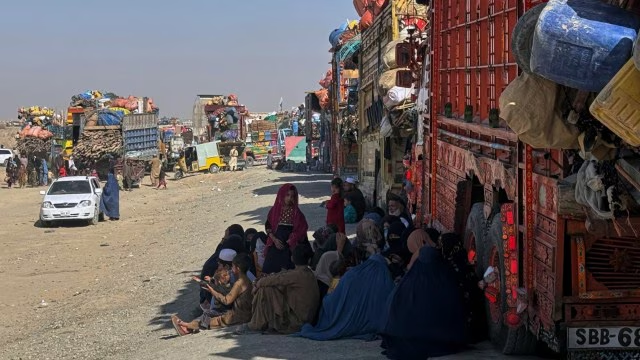
At border crossings such as Dogharoun and Milak, hundreds of buses arrive daily. While some refugees choose to return voluntarily, UNHCR says most are fleeing “under adverse circumstances,” often with only the clothes they can carry.
At Herat’s Islam Qala border, UNHCR and local partners distribute blankets, gas cylinders, jerry cans, and basic food to newly arrived families. But the needs are far greater than the aid available.