Pakistan’s generals reap the rewards from great power politics
In 2025, Pakistan completed a decisive consolidation of military power while reviving its relevance as a regional stakeholder. The hybrid system that once placed civilian politicians in the foreground while the army operated the real levers of authority has given way to something closer to unvarnished military primacy.
For many Pakistanis, 2025 marked a deeper erosion of democracy. The judiciary weakened further, parliamentary authority diminished and elected representatives were reduced to largely compliant roles. Most members of the National Assembly, seated after the disputed February 2024 elections, aligned closely with the military establishment. Through a series of legislative measures, they formalised a transfer of authority from civilian institutions to the armed forces, prioritising stability over democratic contestation.
These developments further marginalised former prime minister Imran Khan — detained since August 2023 on charges widely regarded as politically motivated — and fuelled domestic unrest.
Months ahead of Donald Trump’s return to the White House, Khan’s supporters had lobbied republican congressmen August Pfluger, Joe Wilson and Jack Bergman as well as a close Trump aide, Richard Grenell, for Khan’s release. But subsequent international developments brought those efforts to naught.
Khan’s detention continued to draw international concern. In December 2025, UN Special Rapporteur on Torture Alice Jill Edwards called for urgent action over reports of inhumane conditions at Adiala Jail, including prolonged solitary confinement.
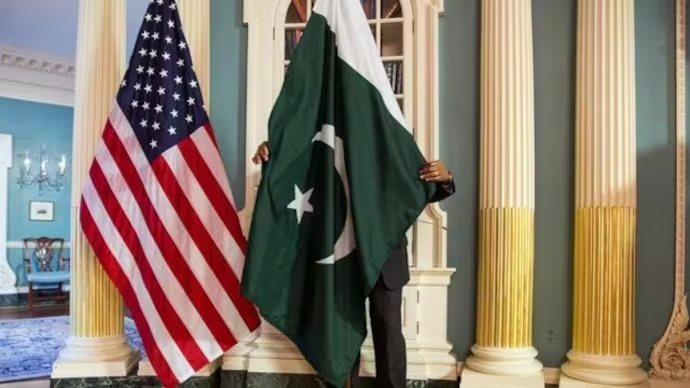
Pakistan’s gratitude for Trump’s role in facilitating a ceasefire with India following a four-day confrontation from 7–10 May 2025 further strengthened bilateral ties with Washington. Through ‘Operation Sindoor’, India attempted to establish a new normal by targeting alleged militant camps inside Pakistan, but was embarrassed after losing at least five aircraft to Pakistani fire.
Trump repeatedly referred to the confrontation. His frustration with Indian trade policies also gave Pakistan leverage in Washington.
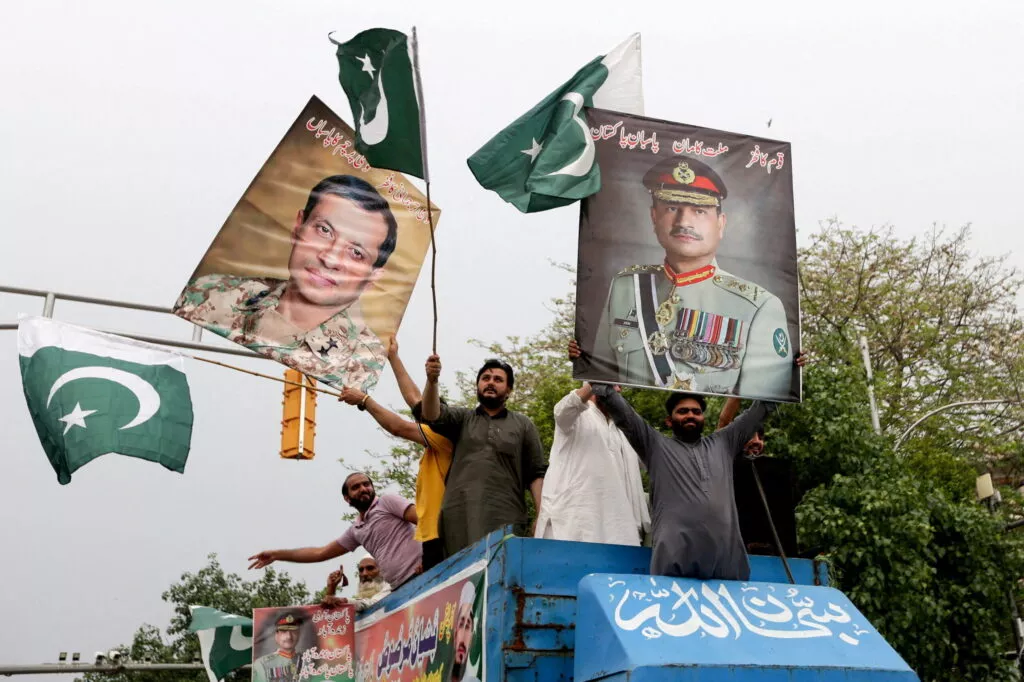
The aftermath brought swift institutional rewards for the military leadership. In November, the 27th Constitutional Amendment elevated General Asim Munir to Field Marshal, the first since Ayub Khan, and created the position of Chief of Defence Forces. This role placed the army, navy and air force all under his direct command and granted him authority over senior appointments, promotions and dismissals — as well as lifetime immunity from criminal proceedings.
Almost all legislators voted for these changes, continuing a pattern established when they approved the 26th Amendment in 2024. Both amendments were designed to diminish parliamentary supremacy and judicial independence under the shadow of a dominant military establishment.
These far-reaching changes were enacted by a legislature whose legitimacy remains contested. Allegations of widespread rigging in the 2024 elections persist, with more than half of the related petitions still unresolved before the Election Commission well beyond the constitutional deadline.
Yet Pakistan’s civil-military leadership gained international endorsement when Trump referred to Munir as his ‘favourite field marshal’. The warmth effectively extinguished hopes among Khan’s supporters that external pressure might secure his release from the more than 180 cases filed against him since his removal in a no-confidence vote in April 2022.
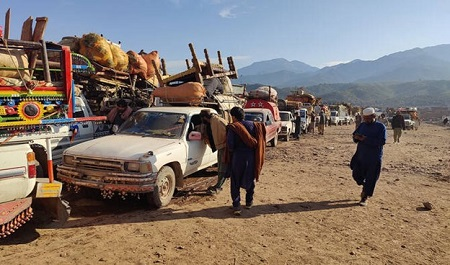
The longest suspension of the Pakistan–Afghanistan border since 11 October marked another defining moment in relations with Kabul in 2025. Islamabad claims the violence originates from Afghan sanctuaries used by the outlawed Tehreek-e-Taliban Pakistan (TTP) and has demanded a crackdown. Afghan authorities deny this, insisting terrorism is Pakistan’s internal problem.
Proxy terrorism in provinces bordering Afghanistan remained a pressing challenge. Ethnic Baloch separatist groups such as the Baloch Liberation Army targeted security forces, infrastructure and Chinese interests in Balochistan, while the TTP, an ethnic Pashtun Islamist militant group, did the same in Khyber Pakhtunkhwa. Pakistani terrorist violence surged by almost 34 per cent in 2025, the most violent year in a decade.
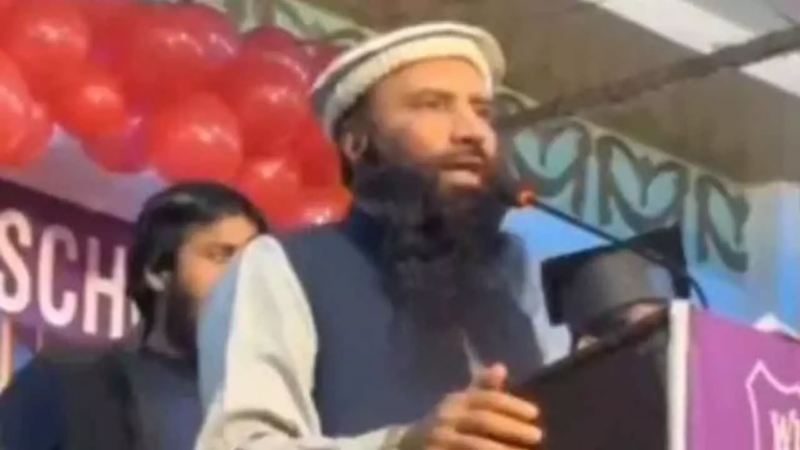
Pakistani authorities officially branded the Baloch Liberation Army as an India-sponsored terrorist entity and described the TTP as ‘infidels’ masquerading as Islamists.
2025 demonstrated how easily democratic principles can be traded for strategic convenience. As the United States grapples with intensified rivalry from China and Russia, a military-led Pakistan aligns with Washington’s priorities. Interest in rare earth minerals and renewed counter-terrorism cooperation also brought Pakistan back into the geopolitical matrix.
Within the region, defined by simmering US–Iran and Saudi Arabia–UAE tensions, nuclear-armed Pakistan received strategic attention from Saudi Arabia. In September, Saudi Arabia’s Crown Prince Mohammed bin Salman signed a ‘Strategic Mutual Defence Agreement’ with Pakistan’s Prime Minister Shehbaz Sharif in Riyadh. The agreement also prompted Turkiye to join them.
This alignment also helped heavily indebted Pakistan secure continued funding from the International Monetary Fund and the World Bank. International scrutiny of democracy and human rights in Pakistan also waned, largely for geopolitical reasons.
Yet Pakistan’s renewed relevance and veneer of internal stability, secured through the suppression of dissent and transient great power favour, are fragile. The hybrid regime still struggles to earn public trust and the appearance of order carries the seeds of its undoing. In Pakistan, where grievances repeatedly boil over, short-term order may prove a prelude to deeper and more dangerous disorder.