Displacement in Tirah Valley – Political Fault Lines and the Question of Motive
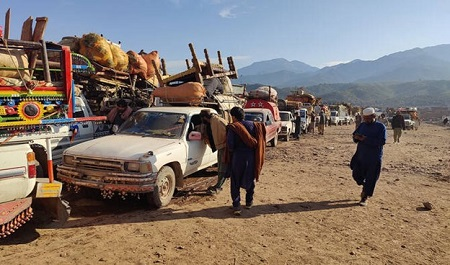
The January 2026 evacuation orders in Tirah Valley illustrate a familiar pattern in Pakistan’s counterinsurgency approach: large‑scale civilian displacement preceding yet another military operation in a region repeatedly subjected to security campaigns. On January 16 and 17, the Pakistan Army instructed tens of thousands of families to leave their homes ahead of a new offensive, its twenty‑third major operation in the valley since 2001. Between 20,000 and 37,000 households were told to depart by January 25, sending an estimated 100,000 people toward Peshawar and Bara in the dead of winter.
Officials described the campaign as a necessary strike against remnants of Tehrik‑i‑Taliban Pakistan and Lashkar‑e‑Islam. But for the people of Tirah, the official narrative felt painfully familiar: another promise of security, another uprooting, another cycle beginning again before the last one had truly ended.
The state announced compensation packages biometric registration, transportation reimbursements, monthly stipends, and multimillion‑rupee payouts for destroyed homes. Yet the lived reality bore little resemblance to these assurances. Families first queued for hours at Bara Markaz, then moved to Dwa Thoye for travel reimbursements, and finally trekked to Paindi Cheena and Mandi Kas for grants. No formal camps awaited them. Many had fled in haste, carrying only blankets and a few utensils, and now found themselves sleeping in the open as temperatures plunged.
Registration centers buckled under the sheer volume of displaced people. Aid distribution faltered. Children shivered through the nights, the elderly went without medicine, and food supplies dwindled. The journey from Bagh Markaz to Bara, normally a three‑hour trip, stretched into days as weather, bureaucracy, and sheer human congestion slowed every step. Even the evacuation process itself was suspended when snowfall made the roads impassable.
Tirah Valley has lived this story before. Operation Rah‑e‑Shahadat in 2013 displaced more than 11,000 families. Zarb‑e‑Azb in 2014 uprooted thousands across the tribal belt. Each time, residents returned to find checkpoints, damaged homes, and a fragile calm that dissolved as militants slipped back across porous borders. Explosions in September 2025, killing 30 people, were cited as justification for the latest offensive. But many in the region question why twenty‑two previous operations failed to bring lasting peace and why the burden of these failures always falls on civilians.
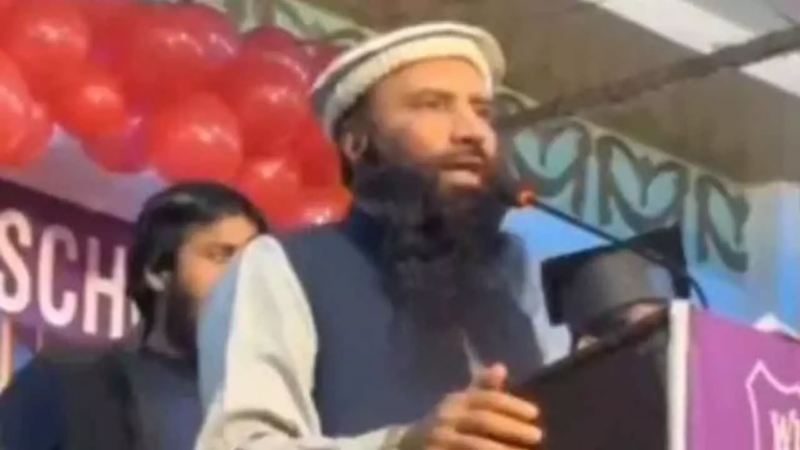
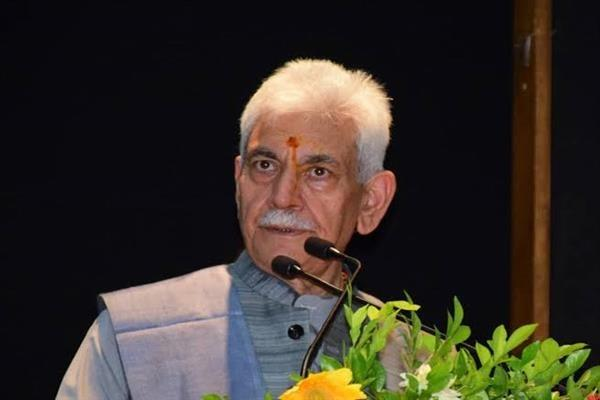
Khyber Pakhtunkhwa’s Chief Minister Sohail Afridi, a Pashtun and a member of the opposition PTI, has publicly criticized the federal January 2026 evacuation as a “closed‑door policy” that excluded provincial authorities from planning. He expanded registration points to schools and markets, but his anger reflected a deeper suspicion: that the operation’s timing and location targeted PTI strongholds under the guise of counterterrorism.
Pashtun nationalist leaders voiced even sharper criticism. Mahmood Khan Achakzai condemned the evacuation as state coercion against civilians.While officials insist the operation is purely security‑driven, critics argue that the valley’s strategic and economic value cannot be ignored. Tirah’s mountains contain chrome, marble, and other minerals. In Pakistan’s former tribal areas, military operations have often served overlapping agendas, counterterrorism, territorial consolidation, resource access, and political control. Tirah appears no different.Videos circulating online showed protesters with tape over their mouths, women describing the fully furnished homes they had abandoned, and families huddled in trucks as snow fell around them. The symbolism was unmistakable: a people silenced, displaced, and trapped between militant violence and state force.
The humanitarian toll extends far beyond official statistics. The heavy‑handed tactics would only deepen resentment and fuel militancy echoing the darkest lessons of the War on Terror, when indiscriminate operations and drone strikes radicalized more young men than they eliminated.Displacement camps where they exist become crucibles of poverty and frustration.
Young men watch their families beg for rations, their mothers and sisters endure squalid conditions, and their futures evaporate. In such environments, militant recruiters find fertile ground. The aftermath of the 2013 operation demonstrated this clearly: communities returned to shattered livelihoods, deepened mistrust of the state.
For many internally displaced families, the current evacuation is viewed less as an isolated emergency and more as the continuation of a long‑running pattern. Authorities suggest families may go back after April 2026, but history offers little comfort. Previous operations dragged on for years. Reconstruction lagged. Homes were found occupied by military installations or reduced to rubble. Compensation rarely matched actual losses. Households displaced in 2023 were initially told they would return within three months; two years later, many remain without a clear timeline for repatriation. The new directive extends this uncertainty to the remaining residents of Tirah, who are now being relocated in the middle of winter. Several displaced individuals note that both the scope of the operation and its likely end point remain unclear.
A consistent observation among residents is that large‑scale evacuations rarely achieve their stated security objectives. Militant groups have historically avoided direct confrontation, dispersing into the surrounding mountains or crossing into Afghanistan, only to reappear once military operations wind down. This dynamic has repeated across two decades of counterinsurgency efforts in the region.
Given this history, the central question for many observers is not whether the current operation will meet its immediate tactical goals, but whether it will differ in any meaningful way from previous campaigns. Tirah Valley has experienced multiple cycles of clearance, displacement, and partial return, none of which have produced durable stability.