Central Asia Adjusts to a Permanent Afghan–Pakistani Security Shock
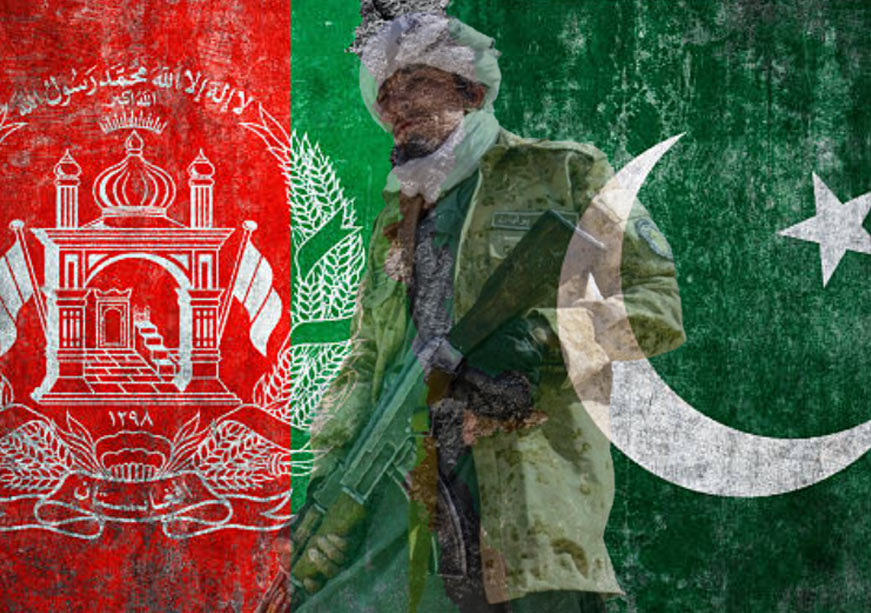
As the Afghanistan–Pakistan confrontation becomes a permanent feature of the regional landscape, Central Asia is adjusting its security outlook, trade routes, and connectivity planning to manage sustained instability
The escalating Afghanistan–Pakistan conflict is one of the most consequential geopolitical shocks affecting Central and South Asia. Episodic clashes between Taliban and Pakistani forces have evolved into a persistent security crisis involving airstrikes, drone attacks, border closures and political escalation. Central Asia no longer views the conflict as a temporary disruption awaiting diplomatic repair, but as a structural condition that must be planned around. This shift has altered regional threat perceptions, reinforcing concerns over cross-border militancy and unilateral Pakistani responses.
For Central Asian governments, repeated closures, customs disputes, and the instrumentalisation of security incidents have eroded confidence in Afghan-Pakistani transit as a predictable conduit to South Asian and maritime markets. Strategic planning is shifting toward resilience, redundancy and modular connectivity, reshaping how the region approaches security, trade and infrastructure development.
Afghanistan as the Pivot of Competing but Complementary Eurasian Axes
The Afghan–Pakistan crisis is accelerating a broader geopolitical reordering across Eurasia. Two infrastructure-centred axes are increasingly visible: an Iran–India tandem, closely aligned with Russia as a northern partner, emphasising diversification; and a Pakistan–Saudi Arabia alignment, with China as a critical eastern partner, centred energy corridors and China–Pakistan Economic Corridor (CPEC) linked connectivity.
Afghanistan sits at the convergence point of these overlapping coalitions of interest. As Kabul–Islamabad relations worsen, Afghanistan is deepening ties with Iran, India, Russia and Central Asia, while remaining economically embedded with China and Pakistan. The result is a competitive process shaping how Afghanistan functions as a layered transit platform.
This strategic competition is most visible in the emergence of two major rail corridors across Afghan territory: the Kazakhstan–Turkmenistan–Afghanistan (KTA) and Uzbekistan–Afghanistan–Pakistan (UAP) routes. Whichever corridor captures first-mover cargo will shape tariffs, standards, and political leverage – even as both ultimately operate in parallel.
While officials describe the two projects as complementary, competition over cargo capture, political optics, and external sponsorship is unavoidable. China favours the eastern alignment; India has strong incentives to support the western route. Central Asian states, however, benefit from optionality.
Astana’s KTA initiative, anchored by upgrades to the Turgundi–Herat railway, aligns with the eastern branch of the International North–South Transport Corridor (INSTC) and preserves Russia-linked supply chains while keeping Iran and India firmly in play. Kazakhstan’s investment positions Herat as a logistics hub with access eastward to Uzbekistan and westward to Iranian ports.
Uzbekistan’s UAP project, formalised in July 2025, offers Central Asia its fastest route to Pakistani seaports and dovetails with China’s China-Kyrgyzstan-Uzbekistan (CKU) railway and CPEC strategy, creating a potential eastern transport ring linking Kashgar, Central Asia, Afghanistan and Pakistan.
While officials describe the two projects as complementary, competition over cargo capture, political optics, and external sponsorship is unavoidable. China favours the eastern alignment; India has strong incentives to support the western route. Central Asian states, however, benefit from optionality.
Fragmented Governance, Security Spillover Elevate Northern Border Risks
Central Asian security assessments place heavy emphasis on the Taliban’s institutional fragmentation and factional divides. Afghanistan functions as a loose aggregation of provincial commanders, tribal networks, intelligence units and religious authorities whose loyalties and incentives vary widely. Decision-making authority is often localised, revenue systems remain informal, and chains of command are inconsistent.
Northern Afghan provinces remain particularly sensitive, having long served as transit corridors for smuggling, informal trade and radical networks. As Taliban attention and resources are diverted toward confrontation with Pakistan or internal security pressures in the east, governance in the north could deteriorate further. This would increase the likelihood of border incidents, militant infiltration, and locally driven escalation beyond Kabul’s control. These concerns were reinforced by the 27 November drone attack on Chinese workers in Tajikistan, underscoring that Afghanistan’s instability can affect foreign assets across Central Asia.
In response, Central Asian states are strengthening border infrastructure and surveillance systems. Tajikistan is upgrading border infrastructure and military hardware with support from the Russian-led Collective Security Treaty Organization (CSTO). The proliferation of drones has added urgency to the development of anti-drone radar, electronic jamming and UAV monitoring units.
China is expected to deepen security ties with Central Asia through enhanced intelligence sharing, counterterrorism training, and support for border surveillance and anti-drone capabilities. Coordination through the CSTO, Shanghai Cooperation Organisation (SCO), and bilateral channels has intensified, with Russia remaining the primary external security backstop along the Afghan frontier. Regional governments view this engagement as complementary to Russian security guarantees.
Economic Rationality Coexists with Security Fragility
While Taliban security governance remains fragmented, its economic administration has demonstrated a greater degree of coherence than initially expected. Provincial customs authorities and trade officials have shown an ability to reroute trade flows rapidly in response to Pakistani border closures, redirecting imports and exports through Iran and Central Asia.
The coexistence of rational economic behaviour with weak coercive control creates persistent uncertainty. For Central Asia, the key risk lies not in deliberate confrontation by Kabul, but in the Taliban’s limited capacity to enforce discipline across distant provinces.
This adaptability has moderated fears that each security incident could trigger economic collapse. However, the coexistence of rational economic behaviour with weak coercive control creates persistent uncertainty. For Central Asia, the key risk lies not in deliberate confrontation by Kabul, but in the Taliban’s limited capacity to enforce discipline across distant provinces.
Exposure to Afghan instability varies significantly across Central Asia. Tajikistan remains the most vulnerable due to its long, mountainous border and its adversarial political relationship with the Taliban. Dushanbe’s refusal to recognise the Taliban and its perceived links to Afghan opposition groups heightens the risk of localised provocations.
Uzbekistan maintains more constructive engagement with Kabul, emphasising trade, electricity exports, and transit agreements. Nevertheless, Uzbek officials increasingly factor Afghan–Pakistani instability into infrastructure and energy planning. Turkmenistan’s neutrality offers limited insulation, as its sparsely populated frontier provides minimal strategic depth despite extensive fencing and patrols.
Even Kazakhstan, despite lacking a direct border, treats Afghan instability as a strategic variable. Astana increasingly views Afghanistan as both a security risk and a geopolitical arena in which Kazakhstan and Uzbekistan seek to assert themselves as middle powers. This has encouraged the development of parallel and partially redundant transit routes rather than reliance on a single southern corridor.
Pragmatic Economic Engagement and Resilient Connectivity Design
Despite persistent security concerns, Central Asia has expanded pragmatic economic engagement with the Taliban. Uzbekistan has emerged as one of Afghanistan’s principal economic partners, supplying electricity, flour, foodstuffs, cement, petroleum products, and construction materials. Turkmenistan continues to export electricity to western Afghanistan and remains committed to long-term energy cooperation, including via the Turkmenistan–Afghanistan–Pakistan–India Pipeline (TAPI).
Tajikistan exports seasonal electricity and agricultural goods to northern Afghan provinces, while Kazakhstan is a major supplier of wheat, flour, vegetable oils, fuel and industrial inputs. Collectively, Central Asian states accounted for an estimated 18-20 percent of Afghanistan’s recorded imports in 2024, and around 80-90 percent of electricity imports, making the region one of Kabul’s most reliable economic lifelines as international aid declines.
Deeper economic integration of Afghanistan reduces the risk of radical political destabilisation, providing transit revenues that generate income, sustain employment, and provide a minimal economic base for the country’s recovery. However, by advancing Trans-Afghan connectivity, Central Asian states simultaneously help stabilise the Afghanistan state while reinforcing the authority of the Taliban, a regime many regional actors neither formally recognise nor view as a desirable long-term partner.
This interdependence underpins a transactional equilibrium: engagement without recognition, trade without political alignment, and infrastructure cooperation without binding security guarantees. Deeper economic integration of Afghanistan reduces the risk of radical political destabilisation, providing transit revenues that generate income, sustain employment, and provide a minimal economic base for the country’s recovery. However, by advancing Trans-Afghan connectivity, Central Asian states simultaneously help stabilise the Afghanistan state while reinforcing the authority of the Taliban, a regime many regional actors neither formally recognise nor view as a desirable long-term partner.
The Afghan–Pakistan crisis has also introduced new uncertainty for the Central Asia-South Asia power project (CASA-1000), TAPI, and Trans-Afghan transport corridors. CASA-1000 remains exposed near the Afghan–Pakistani border, while TAPI faces vulnerabilities along routes crossing some of Afghanistan’s least stable provinces. Pakistan’s internal instability further undermines confidence in both projects.
Rather than abandoning southern connectivity, Central Asian governments are increasingly hedging. Central Asia Regional Economic Cooperation (CAREC) corridors, road-based Transports Internationaux Routiers (TIR) systems, and western Trans-Afghan alignments through Turkmenistan and Herat are evaluated not only for efficiency, but for their ability to function amid intermittent disruptions. Flagship rail projects such as the Termez–Mazar-i-Sharif–Kabul–Peshawar line remain politically attractive but are increasingly seen as supplementary rather than transformative.
Outlook: Managing Instability, Preserving Choice
The Afghanistan–Pakistan confrontation underscores that security predictability can no longer be assumed, but economic engagement can proceed under managed risk. Central Asia is adapting rather than retreating – extracting economic value while limiting exposure through diversification, border hardening, and multi-vector diplomacy.
The Afghanistan–Pakistan confrontation underscores that security predictability can no longer be assumed, but economic engagement can proceed under managed risk. Central Asia is adapting rather than retreating – extracting economic value while limiting exposure through diversification, border hardening, and multi-vector diplomacy.
In this context, India–Central Asia cooperation has significant untapped potential. India’s growing engagement through the INSTC, Chabahar Port, development finance, and digital connectivity initiatives aligns closely with Central Asia’s preference for redundancy and autonomy. Cooperation could deepen through joint investment in western Trans-Afghan logistics hubs; coordination on rail and multimodal standards linking KTA corridors with Iranian ports; expanded use of air corridors and digital trade platforms to hedge against land-route disruptions; and greater policy alignment between India and Central Asian states within the INSTC and Ashgabat Agreement frameworks.
If both eastern and western corridors mature, Central Asia gains leverage through choice. If one dominates, it will shape not only trade flows but the distribution of influence across Eurasia. Until a stable equilibrium emerges between Kabul and Islamabad, resilience, redundancy and pragmatic engagement will remain the defining features of Central Asia’s southern strategy.