
BEZIMENNE, Ukraine, May 1 (Reuters) – Cowering in the labyrinth of Soviet-era bunkers far beneath the vast Azovstal steel works, Natalia Usmanova felt her heart would stop she was so terrified as Russian bombs rained down on Mariupol, sprinkling her with concrete dust.
Usmanova, 37, spoke to Reuters on Sunday after being evacuated from the plant, a sprawling complex founded under Josef Stalin and designed with a subterranean network of bunkers and tunnels to withstand attack. read more
“I feared that the bunker would not withstand it – I had terrible fear,” Usmanova said, describing the time sheltering underground.
Register now for FREE unlimited access to Reuters.com Register
“When the bunker started to shake, I was hysterical, my husband can vouch for that: I was so worried the bunker would cave in.”
“We didn’t see the sun for so long,” she said, speaking in the village of Bezimenne in an area of Donetsk under the control of Russia-backed separatists around 30 km (20 miles) east of Mariupol.
Civilians evacuated from Ukraine’s Mariupol, Russia renews shelling
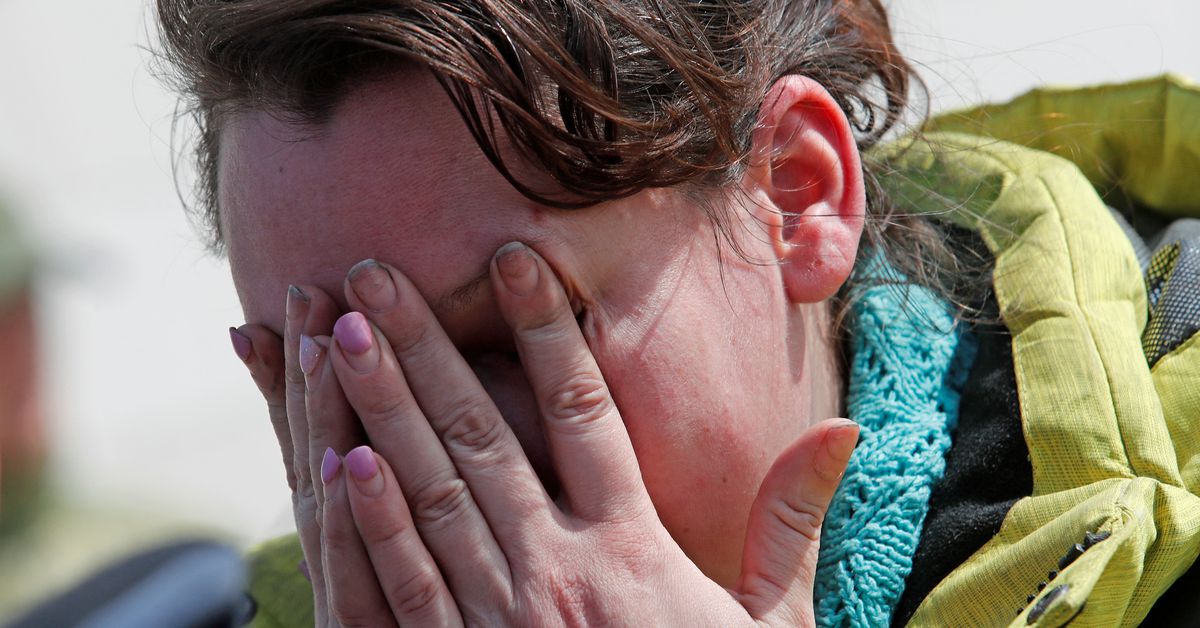
1/3 Azovstal steel plant employee Natalia Usmanova, 37, who was evacuated from Mariupol, reacts upon arrival at a temporary accommodation centre during Ukraine-Russia conflict in the village of Bezimenne in the Donetsk Region, Ukraine May 1, 2022. REUTERS/Alexander Ermochenko Read More
Jill Biden to meet with Ukrainian refugees in Romania and Slovakia
How military technology reaches Russia in breach of U.S. export controls
She recalled the lack of oxygen in the shelters and the fear that had gripped the lives of people hunkered down there.
Usmanova was among dozens of civilians evacuated from the plant in Mariupol, a southern port city that has been besieged by Russian forces for weeks and left a wasteland.
Usmanova said she joked with her husband on the bus ride out, in a convoy agreed by the United Nations and the International Committee of the Red Cross (ICRC), that they would no longer have to go to the lavatory with a torch.
“You just can’t imagine what we have been through – the terror,” Usmanova said. “I lived there, worked there all my life, but what we saw there was just terrible.”
Register now for FREE unlimited access to Reuters.com Register
Writing by Guy Faulconbridge Editing by Frances Kerry
Our Standards: The Thomson Reuters Trust Principles.