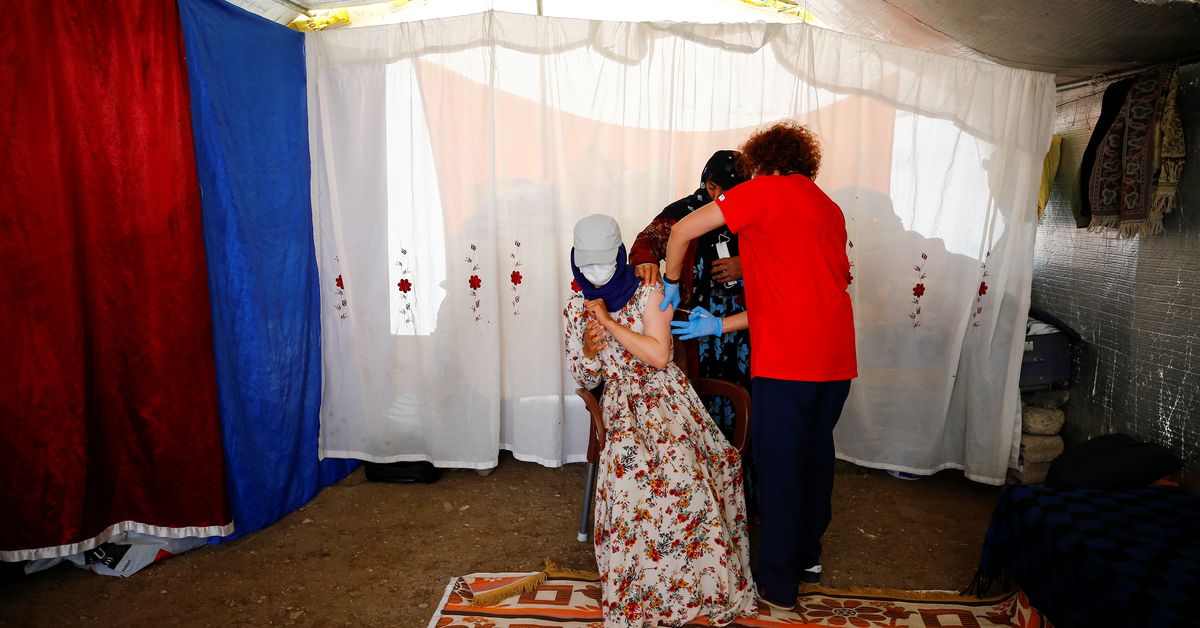
A seasonal farm worker receives a dose of the Pfizer-BioNTech coronavirus disease (COVID-19) vaccine in the village of Oguzlar near Polatli as nationwide vaccination continues, in Ankara, Turkey July 8, 2021. REUTERS/Cagla Gurdogan
DIYARBAKIR, Turkey, July 28 (Reuters) – In the Turkish city of Diyarbakir, health workers’ pleas to citizens to get vaccinated against COVID-19 ring out through the streets as a surge in new cases in the country’s east, where vaccination rates lag, alarms authorities.
“Valued people of Diyarbakir, the best way to be protected from illness is vaccination,” a health worker announces through an ambulance speaker, as part of a mobile campaign that started during last week’s Muslim holiday of Eid al Adha.
The mobile teams have vaccinated some 5,000 people in 15 days by visiting neighbourhoods and villages and informing people, said Semih Erdal Tekay, a local health official.
Nearly half of Turkey’s population of 84 million has received at least one vaccine dose, but eastern provinces, the country’s most deprived and where suspicion of the vaccines lingers, have seen slow uptake.
The region has led a national surge in new cases to nearly 20,000 a day from around 5,000 two weeks ago.
In Diyarbakir, Turkey’s largest Kurdish city, where around 41% of people over 18 have received at least a first dose, cases nearly doubled in the week to July 23 to 224 per 100,000 people.
Health Minister Fahrettin Koca said on Wednesday the rise in cases corresponded to vaccination levels for each province, adding that people should also wear masks and social distance.
Seyhmus Akcin, a local resident, got a vaccine in an ambulance parked in a street. Some people did not want a shot because of misinformation on social media, he said.
While Turkey’s health infrastructure has been efficient in administering vaccines, the nationwide programme faced setbacks earlier this year due to supply issues.
The vaccination rate picked up significantly in June after Ankara reached a deal with Pfizer/BioNTech for more deliveries, but cases have been on the rise since early July.
“Everyone should get vaccinated,” said teacher Ercan Gungor, adding the academic year was about to start and children’s education could be hit.
“I don’t think the pandemic can be reversed without vaccination.”
Writing by Ali Kucukgocmen Editing by Alexandra Hudson
Our Standards: The Thomson Reuters Trust Principles.