Why International Law Still Fails Afghan Women
This piece was originally published by PassBlue, a women-led nonprofit newsroom that covers the U.N. and global women’s rights, under the headline “Closing the Legal Gap on Gender Apartheid in Afghanistan.”
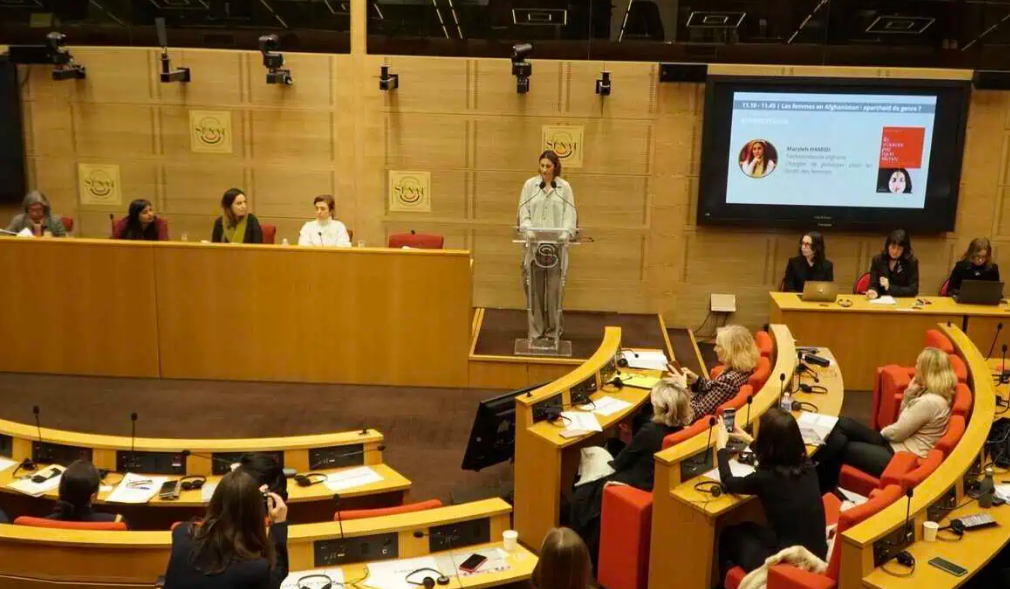
In early December, the international Permanent Peoples’ Tribunal in The Hague presented its verdict on the situation of women and girls in Afghanistan. Two days later, on Dec. 13, the French Senate convened a high-level colloquium titled “No Peace Without Women: Their Representation in Diplomatic, Military and Political Bodies.”
Together, these two forums—one judicial-moral, the other parliamentary-political—converged on a stark conclusion: The exclusion of Afghan women is systematic, intentional and state-imposed. At the same time, they exposed a critical gap in international law, one with far-reaching implications for the United Nations system, international accountability mechanisms and the global women, peace and security agenda.
Since the Taliban’s return to power in August 2021, Afghan women and girls have been progressively removed from almost every sphere of public life. Girls are banned from secondary and higher education. Women are excluded from most employment, face severe restrictions on movement and have been rendered legally invisible. Institutions responsible for protecting women’s rights have been dismantled.
U.N. experts and international human rights organizations have consistently noted that these measures are neither temporary nor isolated. They constitute a coherent system of governance. Women are excluded not as individuals but as a category. The objective is not regulation within society, but removal from society itself.
This reality was echoed repeatedly during the Afghanistan-focused interventions at the French Senate hearing, where speakers emphasized that women have become the primary targets of political control.
Testimony and “Lived Reality”
Among the most powerful interventions were those of Marzieh Hamidi, an Afghan athlete and activist, and Nigara Mirdad, an Afghan women’s rights advocate, whose testimonies conveyed the consequences of Taliban policies. Their accounts underscored how exclusion is enforced not only through decrees, but also through fear, surveillance and the thorough dismantling of women’s aspirations, particularly in education and public life. Their testimonies illustrated a broader pattern: women are not merely suffering the effects of conflict but are being deliberately positioned as the symbolic and practical center of repression.https://www.instagram.com/p/DSIMQz1DMan/embed/?cr=1&v=14&wp=810&rd=https%3A%2F%2Fmsmagazine.com&rp=%2F2026%2F01%2F27%2Fgender-apartheid-afghanistan-women-girls%2F#%7B%22ci%22%3A0%2C%22os%22%3A23603.800000000047%7D
The French Senate colloquium took place as the world is marked by escalating conflict. As highlighted by Patricia Elias, a gender expert, current estimates indicate that there are 78 armed conflicts worldwide, the highest number since World War II, with a sharp increase since 2010. Speakers at the hearing highlighted that in such contexts, women are disproportionately targeted as part of strategies of domination.
The relevance of U.N. Security Council Resolution 1325 (2000) was repeatedly emphasized. The resolution recognizes the gender-specific effect of conflict, calls for women’s full participation in peace processes and affirms the obligation to protect women from conflict-related violence. Subsequent resolutions, including Resolution 1820, recognized sexual violence as a weapon of war.
Yet, as several speakers noted, these legal frameworks address participation and protection, not comprehensive systems of gender-based domination.
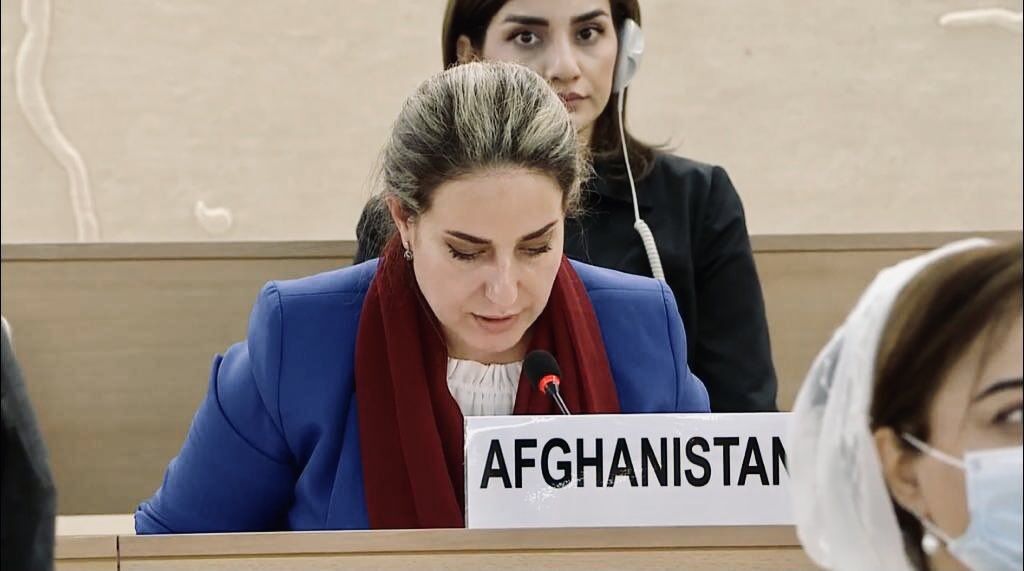
The Permanent Peoples’ Tribunal is not a criminal court and does not issue binding judgments. Founded in Bologna, Italy, in 1979, its mandate is to examine situations in which grave violations persist despite insufficient action by formal legal institutions and to establish a rigorous moral and legal record grounded in international law.
In its Afghanistan session, the tribunal reviewed testimony from Afghan women, expert legal analysis and documentary evidence. It concluded that the Taliban have imposed a systematic, intentional regime of gender-based exclusion that is enforced through state authority.
The tribunal found that the purpose and effect of this regime is the erasure of women and girls from social, political, cultural and intellectual life. It characterized these acts as persecution on gender grounds and identified elements consistent with crimes against humanity. Cultural or religious justifications were explicitly rejected.
In plain terms, the tribunal concluded that Afghan women are being removed from society by design.
Recognizing the Legal Gap
A central contribution at both the tribunal and the Senate colloquium came from Rashida Manjoo, a former UN special rapporteur on violence against women and a judge of the tribunal.
Manjoo highlighted a critical limitation in international criminal law. Apartheid is clearly defined and prohibited under international law, notably in the 1973 Apartheid Convention and the Rome Statute of the International Criminal Court. However, these instruments define apartheid explicitly in relation to racial domination.
There is no explicit recognition of apartheid based on gender.
Yet, as Manjoo argued, the Taliban’s policies exhibit the structural characteristics of apartheid: systematic domination, segregation, institutionalized exclusion and intent to maintain that system. The conduct is visible and documented. What is missing is precise legal naming.
Her recommendation was clear: international law must be amended, expanded or authoritatively interpreted to explicitly recognize gender apartheid. Without such recognition, accountability mechanisms remain limited, despite the scale and severity of the violations.
Several speakers framed Afghanistan as a precedent-setting case. If international law cannot adequately respond to a comprehensive, state-imposed system of gender-based domination, similar regimes elsewhere may remain insufficiently challenged.
As an invited participant at the Senate colloquium and as a member of the Afghan diaspora engaged in women’s rights and education initiatives, I observed a growing convergence between legal analysis, political debate and lived experience. What remains unresolved is whether this convergence will translate into legal and institutional action.
The Permanent Peoples’ Tribunal has documented the evidence. Parliamentary institutions have debated the implications. The findings are public.
At this stage, continued inaction cannot be attributed to lack of information. When systematic oppression is visible and documented, silence is no longer neutral. It becomes a choice, and that choice carries responsibility. Whether international law will evolve to name and confront gender apartheid will shape not only the future of Afghan women, but also the credibility of the international legal system itself.