Trump’s Gaza ISF Plan, and the Limits of U.S.–Pakistan Deal-Making
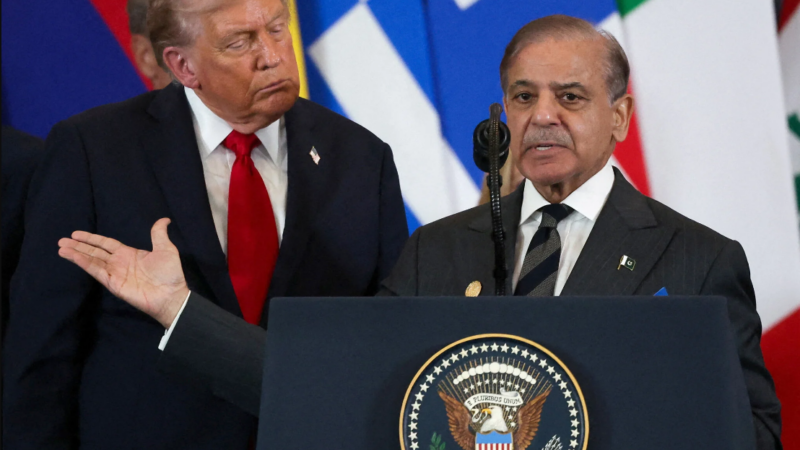
Field Marshal Asim Munir’s ascent as Pakistan’s most powerful military ruler in decades has coincided with President Donald Trump’s high‑risk Gaza stabilization project, creating the perfect environment for a transactional understanding between Rawalpindi and Washington. Munir delivers Pakistani boots for Trump’s proposed International Stabilization Force (ISF) in Gaza, while the U.S. delivers economic lifelines, political cover, and indulgence of his domestic crackdown, especially against Imran Khan and the Pakistan Tehreek‑e‑Insaf (PTI).[1] Yet, as pressure mounts, Pakistan’s familiar act of over‑promising and under‑delivering appears to be re‑emerging, with Munir dragging his feet on ISF commitments while extracting maximum geopolitical rent.
Munir’s power today rests on institutional control over the army and intelligence, a compliant civilian façade in Islamabad, and the systematic dismantling of Imran Khan’s political challenge. His elevation to Field Marshal, consolidation of authority over all three services, and ruthless suppression of PTI after the May 9, 2023 unrest have turned him into Pakistan’s de facto ruler, but also into the single point of blame for economic hardship, political repression, and strategic setbacks such as the humiliation of India’s Operation Sindoor.
In such a context, external backing becomes not a luxury but a survival imperative. Munir needs three things from Washington. First, quiet support for extending his tenure and preserving his extraordinary powers beyond the usual institutional norms. Second, investment and economic relief to shore up Pakistan’s tottering economy and provide a narrative of “rescue through strategic alignment,” visible in recent U.S.–Pakistan MoUs on minerals and energy investments. Third, a blind eye regarding the legal persecution, media blackout, and physical isolation of Imran Khan, whom many observers now describe as the central victim of a military‑engineered political purge.
Trump’s 20‑point Gaza plan imagines an ISF drawn largely from Muslim‑majority countries to disarm Hamas, stabilize Gaza, and oversee reconstruction in a transitional phase.[2] Pakistan, with one of the largest and most experienced Muslim militaries, naturally appears attractive to Washington as a key troop contributor, both for operational reasons and for political optics within the broader Islamic world. For Munir, this is a double‑edged sword. Participation offers strategic leverage; refusal risks alienating a White House that has, unusually, placed Pakistan back near the center of its Middle East calculations.
The US intends to offer upfront political support and economic signals, while Pakistan’s side of the bargain that is troop deployment can be procrastinated, diluted, or reinterpreted indefinitely. Munir has already leveraged the perception of Pakistani cooperation on Gaza to regain high‑level access in the US, culminating in a third planned meeting with Trump within six months, an extraordinary level of engagement for a foreign military chief. Parallel economic diplomacy has yielded MoUs on rare earths and energy investment, which Pakistan can present domestically as proof that Munir’s strategic choices are paying off.
Munir’s reluctance is not only tactical; it is rooted in serious domestic risks. Deploying Pakistani troops to Gaza under a U.S.‑designed plan that involves demilitarizing Hamas could be framed across Pakistan’s political and religious spectrum as collaboration with Israel and complicity in suppressing Palestinian resistance. Public opinion in Pakistan has long been intensely pro‑Palestinian and sharply hostile to perceived U.S.–Israeli designs, making any visible Pakistani role in an externally led stabilization force a potential trigger for mass protest and extremist propaganda.
From Munir’s vantage point, this is a profitable arrangement even if he never fully delivers on ISF. Symbolic cooperation, participation in summits, supportive votes at the UN, and vague commitments about “readiness to contribute under the right conditions” can sustain the illusion of progress long enough to secure what he really wants: an extension of his tenure, increased foreign investment, and functional immunity for his domestic power consolidation. If history is any guide, the U.S. will eventually adjust expectations downward, settle for minimal Pakistani participation, or quietly decouple Gaza stabilization from its Pakistan policy.
However, this time the margin for maneuver is narrower. Trump’s Gaza plan places heavy political weight on visible Muslim troop contributions, and Pakistan is central to that narrative. If Munir continues to stall, Washington will face a choice: either dilute the ISF concept and rely on a smaller, less credible coalition, or confront Pakistan more directly about broken understandings. Either path carries costs. A diminished ISF undercuts Trump’s claim to have “fixed Gaza,” while pressuring Munir risks destabilizing a nuclear‑armed state whose internal balance already hangs by a thread.
For Pakistan, the danger is that the old tactic of hoodwinking may yield diminishing returns in a more transactional, leader‑centric United States. If Trump comes to see Munir as another unreliable partner willing to take concessions while dodging delivery the very guarantees Munir seeks on tenure, investment, and indulgence over Imran Khan could erode rapidly. The Faustian bargain that promised him external protection in exchange for Gaza may yet collapse, leaving him overexposed at home and increasingly distrusted abroad.