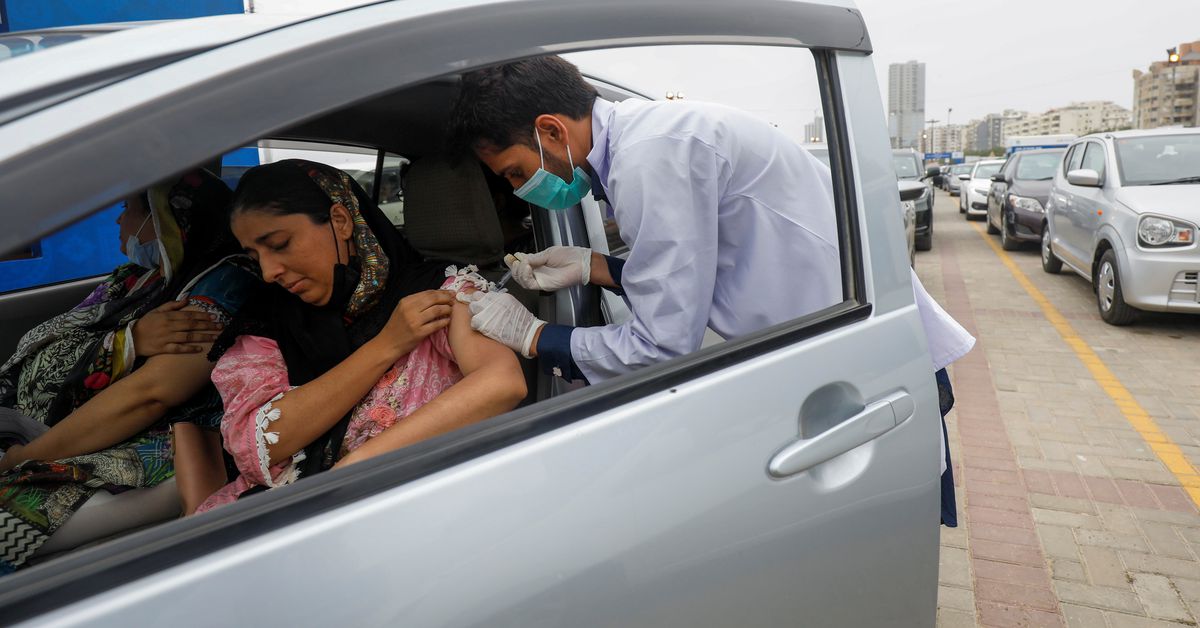
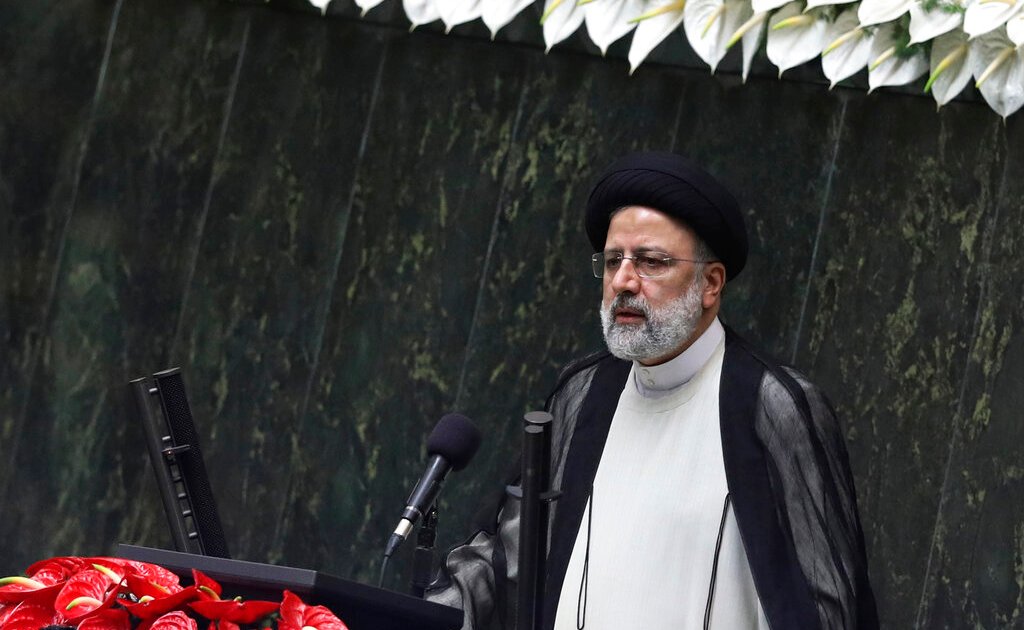
To both the east and the west, the nation’s major trade routes are obstructed by conflict.
In the rugged geography of the Hindu Kush, isolation has long been a tool of survival. But for the Taliban-led administration in early 2026, that isolation has become a trap. Afghanistan currently finds itself physically and economically squeezed by two volatile fronts. To the east, a long-simmering border dispute with Pakistan has boiled over into what Islamabad officially declared an “open war” on February 27.
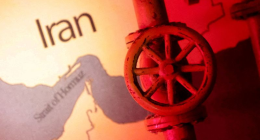
To the west, a high-intensity conflict involving Iran, Israel, and the United States has turned Afghanistan’s primary alternative trade route into a high-risk combat zone. The conflict in Iran, triggered by massive Israeli-U.S. strikes on February 28, has escalated into a sustained naval and aerial campaign. With U.S. carrier strike groups enforcing a partial blockade on Iranian ports to neutralize drone launch sites, maritime trade in the Gulf of Oman has effectively stalled.
For a landlocked nation that produces little of its own industrial or food requirements, Afghanistan’s stability is a direct reflection of its neighbors’ health. The authorities in Kabul now face a grim reality: a regime built on the battlefield may not be able to survive the total strangulation of its markets.
The Durand Line: A War of Attrition and Narratives
The deterioration of relations between Islamabad and Kabul has moved far beyond diplomatic friction. In late February 2026, Pakistan formalized its military posture by launching Operation Ghazab Lil Haq. While Islamabad frames the campaign as a necessary counterterrorism measure, the Taliban leadership in Kabul has denounced it as an unprovoked violation of Afghan sovereignty.
At the heart of the conflict is the Tehreek-e-Taliban Pakistan (TTP). Islamabad maintains that the TTP enjoys freedom of movement and ideological patronage under the Afghan Taliban, asserting that the group utilized Afghan soil to orchestrate attacks resulting in over 2,500 Pakistani fatalities in 2024. The threat escalated significantly in late 2025 as the TTP acquired advanced weaponry left behind by Western forces, raising concerns in Islamabad that the group could increasingly operate with greater tactical capacity. This prompted Pakistan to shift from occasional cross-border strikes to a doctrine of “open war,” aiming to create a permanent buffer zone.
On February 22, Pakistani airstrikes targeted what Islamabad described as TTP hideouts in Khost and Paktika provinces. However, ground reports and local officials provided evidence of a high civilian death toll. The United Nations Assistance Mission in Afghanistan has verified that between late February and early March 2026, cross-border strikes, and aerial attacks killed at least 56 civilians and injured 129 others across Afghanistan, with women and children accounting for the majority of casualties.
More recently, Pakistan has expanded its target list to include Taliban assets as well, including a military unit linked to Taliban Supreme Leader Hibatullah Akhundzada in Kandahar.
In retaliation, Taliban border forces have launched heavy artillery strikes against Pakistani military outposts, effectively turning the Durand Line into an active front and shutting down the eight major border crossings, including Torkham and Spin Boldak.
The Stifling of the Iranian Alternative
As the Pakistani trade route became increasingly unreliable amid repeated border closures in late 2025, the Taliban effectively initiated a strategic “pivot west.” Afghanistan began rerouting trade through Iran and Central Asia, with shipments moving “faster through Iran … than through the Pakistan corridor,” according to Afghan officials.
Reuters reported in late 2025 that bilateral trade between Afghanistan and Iran hit $1.6 billion in the second half of 2025, surpassing the $1.1 billion trade volume with Pakistan during that same period, signaling a clear shift in Afghanistan’s primary trade orientation. This transition was anchored in the growing use of Iran’s Chabahar port – developed with Indian investment – which allows Afghanistan to bypass Pakistan entirely and reduce exposure to political disruptions along its eastern border.
However, the eruption of the Iran War has shattered this backup plan. While Taliban officials at the Islam Qala border publicly maintain that cargo is moving, the reality is a logistical nightmare.
According to the Afghanistan Chamber of Commerce and Investment, trade and transit through the port of Chabahar have been severely affected by the intensifying fighting. Khan Jan Alokozay, a member of the chamber’s leadership board, confirmed that Afghan ships are currently stranded at Chabahar, stating that “loading has stopped” and “everything is on hold” due to heavy congestion and military-related disruptions.
This maritime chokehold does more than just isolate the Iranian regime; it tightens a pincer movement on Afghanistan, a country already reeling from its “open war” with Pakistan. Afghanistan is no longer just diplomatically isolated – it is being physically cut off from the rest of the world by the fallout of its neighbors’ conflicts.
A Human Crisis in the Making
Perhaps the most devastating impact of the Iran War on Afghanistan is the human exodus. Iran currently hosts over 4.5 million Afghans, but as the conflict intensified, Tehran accelerated its previous policy of forced repatriation. According to UNHCR, the United Nations’ refugee agency, roughly 1,700 Afghans are returning from Iran daily. These are not planned returns; these are families fleeing bombardment and economic collapse, arriving in an Afghanistan that cannot feed its current population.
The sudden return of working-age men into an economy with no jobs is a recipe for internal chaos. According to the U.N. Office for the Coordination of Humanitarian Affairs, 17.4 million Afghans are already food insecure. The disruption of supply chains from both Iran and Pakistan threatens to turn a chronic crisis into a localized famine.
Further upping the pressure, the Taliban rely heavily on customs duties to fund their government. With both major trade arteries paralyzed, the central treasury is hemorrhaging money.
The Taliban’s narrative of providing security is being tested. Since taking power in 2021, the regime has promised to end decades of war. But the conflict with Pakistan has brought the battlefield back to the Afghan interior. There are already reports of growing tension between the ideological hardliners in Kandahar and the more pragmatic administrators in Kabul. The pragmatists favor a negotiated settlement to reopen trade, while the hardliners view any concession to Islamabad as a betrayal of sovereignty.
As analysts warn, if the Taliban were to buckle to Pakistani pressure and abandon the TTP, many of those fighters would likely defect to groups like Islamic State Khorasan Province, creating a far more potent internal insurgency. Conversely, if the Taliban continue to fight against Islamabad, they risk total economic collapse.
A continued Afghanistan-Pakistan is also the worst-case scenario for China’s regional ambitions. Beijing has invested heavily in the narrative of Afghanistan as a bridge for the Belt and Road Initiative. However, a bridge is only as useful as the stability at its ends. If Afghanistan is squeezed into a state of collapse, China’s investments, including in the Mes Aynak copper mine, will remain stranded.
Conclusion
For three years, the Taliban managed to play their neighbors against one another, using Iranian trade routes to offset Pakistani pressure. That balancing act required at least one neighbor to remain a stable partner. For Afghanistan, the Iran-Israel-U.S. war closed off its last trading alternative. With both Iran and Pakistan now in states of high-intensity conflict, Afghanistan is no longer a bridge; it is an island.
The immediate priority for the international community must be the establishment of humanitarian corridors through Central Asia, as the traditional southern and western routes are effectively closed. For the Taliban, the choice is now binary: they either find a diplomatic de-escalation with Pakistan regarding the TTP or preside over a fragmented, starving nation.