Amid defence pact with Saudi Arabia and growing ties with Trump, Islamabad has been struggling to quell domestic outrage
As the US–Israeli war against Iran intensifies, with violence spreading across the Gulf and Lebanon, Pakistan is coming under increasing domestic pressure to pick a side.
Pakistan has long been a battleground for competing influence, especially with regards to Saudi Arabia and Iran. While Islamabad played a role in recent years in China’s mediation between the two states, that neutrality now faces a major test.
Yet with a recurring conflict against the Taliban on the Afghanistan border, insurgencies in Balochistan and Khyber Pakhtunkhwa provinces, and high tensions with India, Pakistan can ill afford any more instability. As some of Pakistan’s Gulf allies mull the possibility of retaliation over Iranian missile and drone strikes, Islamabad is scrambling diplomatically to avoid further escalation.
After the killing of Iranian Supreme Leader Ayatollah Ali Khamenei in the initial phase of the US-Israeli attacks on Iran, Pakistan issued a lightly worded statement expressing “concern” rather than outright condemnation. In contrast, Pakistan swiftly “condemned” Iranian attacks on Gulf countries.
A key factor in Pakistan’s relative reluctance to condemn the US is the fact that President Donald Trump has in recent months come to rely on the country as a trusted adviser on Iran, with army chief Asim Munir becoming his “favourite field marshal”.
Following a meeting last June in which the pair discussed the previous round of escalation with Iran, Trump said Pakistan knows Iran “better than most”.
Pakistan has also had a prominent front seat in Trump’s Gaza plan, while the US expressed open support for Pakistan amid its ongoing war with Afghanistan.
Pressure piling up
Yet while Pakistan’s generals and leaders cosy up to Trump and call it a diplomatic victory, at home, there is considerable unease at the country’s participation in the Gaza “Board of Peace” and its ironic decision to nominate Trump for a peace prize.
One of Pakistan’s most prominent foreign policy writers and a former ambassador to the US wrote that Pakistan should stay out of Gaza. Local intelligentsia and other prominent voices have piled pressure on Pakistan’s military and civilian leadership for “selling out”. The war on Iran and the conflict with Afghanistan have made matters worse.
Since Iran’s attack on Saudi Arabia, Pakistan’s foreign minister has warned that his country could get drawn into the conflict because of its mutual defence pact with Riyadh. At the same time, Islamabad has been working to cool tensions across the region.
What the Israel-Iran-US conflict taught Pakistan
Some analysts have accused Pakistan of letting down the Saudis by not following up on the attack, with commentator Umer Karim, a prominent expert on Saudi-Pakistan relations, citing the risk of “irreparable reputational damage”. Other leading Pakistani voices have been similarly critical of the government for failing to take a firm stand, and instead trying to please everyone, with Prime Minister Shehbaz Sharif’s statements largely consisting of copy-paste expressions of “concern” or “solidarity”.
At the same time, there is public outrage over the killing of protesters at the US consulate in Karachi earlier this month, and over Pakistan’s subsequent failure to condemn the US marines who reportedly opened fire at the site. Pakistani officials also blocked off roads in Islamabad and Lahore to keep protesters away from other American diplomatic buildings.
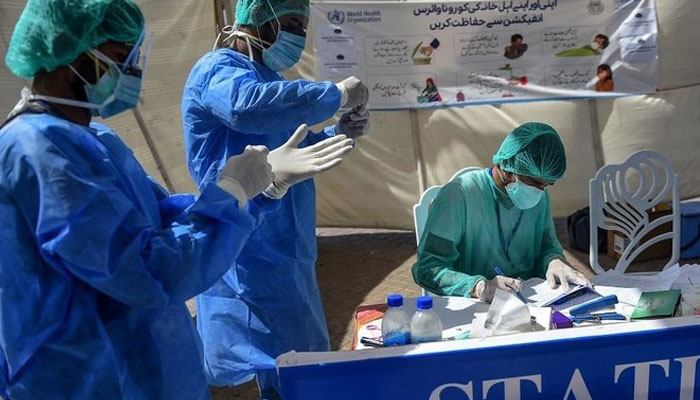
People are clearly fuming about the war in Iran and the killing of Khamenei, coupled with Pakistan’s timid reaction. And with a temporary curfew having been declared in Shia-majority areas, there is a real risk of domestic strife as a direct result of the US-Israeli attack on Iran.
The recent visit to Israel by Indian Prime Minister Narendra Modi also changed the dynamics for Islamabad with regards to its regional defensive posture. Pakistan’s defence minister has warned that his country is becoming encircled by threats – but it has responded like a deer in the headlights, struggling to choose a side between Iran and Saudi Arabia as domestic anger simmers.
At a time when tensions with India and Afghanistan have led to conflict and instability, the Iran attacks could push Pakistan over the edge if it does not stop fence-sitting and adopt a clear strategy soon.