When the Taliban took over Kabul’s corridors of power in August 2021, seventeen of the thirty-three members of Mullah Hasan Akhund’s cabinet were UN-designated terrorists. But Pakistan, with whom Afghanistan shares a 2,640 km disputed border, was the first to send in the members of its establishment to Kabul in a show of support to a militant regime it fostered and supported since the American invasion of Afghanistan after the 9/11 attacks.
But Pakistan is now claiming that the Afghan government is “doing nothing against terrorism emanating from Afghan soil”. Islamabad claims that it is the violation of the US-Taliban Doha agreement that made American withdrawal from Afghanistan conditional on the basis of Taliban’s assurance that Afghanistan “will not become a safe haven for terrorists”. 
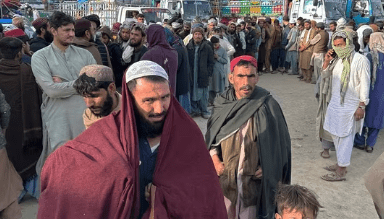
Hundreds of thousands of Afghan refugees are being forced to leave Pakistan in the implementation of Islamabad’s order to remove undocumented people from within its borders, some living since the 1970s when the Soviets invaded Afghanistan.
“Those Afghans who have voluntarily returned from Pakistan, their count stands at 252,000,” Pakistan’s caretaker Prime Minister Anwar ul-Haq Kakar said in a press briefing on November 8.
‘Terrorism’ on rise after Taliban came to power: Pakistan PM
Pakistan’s caretaker Prime Minister claimed that since Taliban came to power in Afghanistan, “Pakistan saw a 60 per cent rise in terrorism”.
“Instability and security situation in the country is being caused by those Afghans living illegally in Pakistan,” ul-Haq Kakar said, adding that Afghan Transit trade from various checkpoints will continue.
Pakistan has also demanded the Interim Afghan government to handover all those wanted by Pakistan in terrorism.
Islamabad claimed that 15 Afghan nationals were involved in suicide attacks in Pakistan this year but did not provide any evidence to back the claim. Many such claims by Pakistan appear contested. This is because a number of new armed groups have propped up during 2010s in the Af-Pak region, notably the Islamic State (Khorasan) and Tehreek-e-Jihad Pakistan (TJP).
Furthermore, the number of targeted attacks on Pakistani troops in the restive province of Balochistan have seen a remarkable rise.
“There was a misconception that we used to think Afghanistan as our fifth province. We are announcing it clearly that we have always considered it as an independent sovereign country,” ul-Haq Kakar said.
“The denial by them (the US) has no relevance. There is documented evidence that the American leftover is being sold on black market. Also, where did the weapons of Afghan military go?”